Product
URL shortener with analytics: track clicks on every link
A short link is also a measurement point. Every click passes through it, so every click can be counted and described — which is the part of link shortening that actually earns its keep.
What is recorded for each click#
- When — each click is timestamped, and the dashboard charts the last day, week, month, and all time.
- Where from — the referrer and the kind of source it is (search, social, email, another site, or direct), so you can tell a click from a newsletter apart from one on a social network or one typed directly.
- Which campaign — any UTM tags on the link, so a tagged link is attributed without opening another tool.
- Where — the country, and the region and city where they can be resolved, derived from the IP address at click time. The address is not kept.
- On what — whether it was a phone, tablet or computer, and the browser and operating system, which is how you learn that your audience is mostly on phones.
Bots and link-preview crawlers are filtered before any of this is recorded, so a link pasted into a chat app that fetches a preview does not register a phantom click.
Why this beats a tracking pixel#
Analytics tools measure what happens on a page you control. A short link measures the click itself, which means it works for destinations you do not control — a partner's site, an app store listing, a PDF, a marketplace product page — and it works from places where you cannot run code: print, SMS, podcasts, slides.
It also answers a different question. Page analytics tell you how many people arrived; link analytics tell you how many people clicked your link in that channel. Put a different short link in each channel and the comparison is immediate.
Tracking campaigns with short links#
One link per channel#
Create /launch-email, /launch-tw and /launch-ig all pointing at the same page. The dashboard then shows which channel produced the clicks without any UTM parameters or dashboard filtering.
Keep UTMs on the destination#
If you also use web analytics, put the UTM parameters in the destination URL. The short link hides them from the reader, carries them through the redirect, and your analytics tool still attributes the session. The campaign tracking guide goes through this in detail.
Read the referrer column#
Even with one link, the referrer breakdown shows where it travelled. A link shared once often turns up later in places you never posted it.
Privacy#
Link tracking has a reputation problem because some shorteners build advertising profiles from clicks. Xlyl records the click details above and nothing else: no IP addresses, no cookies on the visitor, no cross-site identifiers. Statistics are per link and visible only to the link's owner.
What a statistics page shows#
Every link has one. The top is the shape of the traffic — totals for the last day, week, month and all time, and a chart you can switch between those periods.
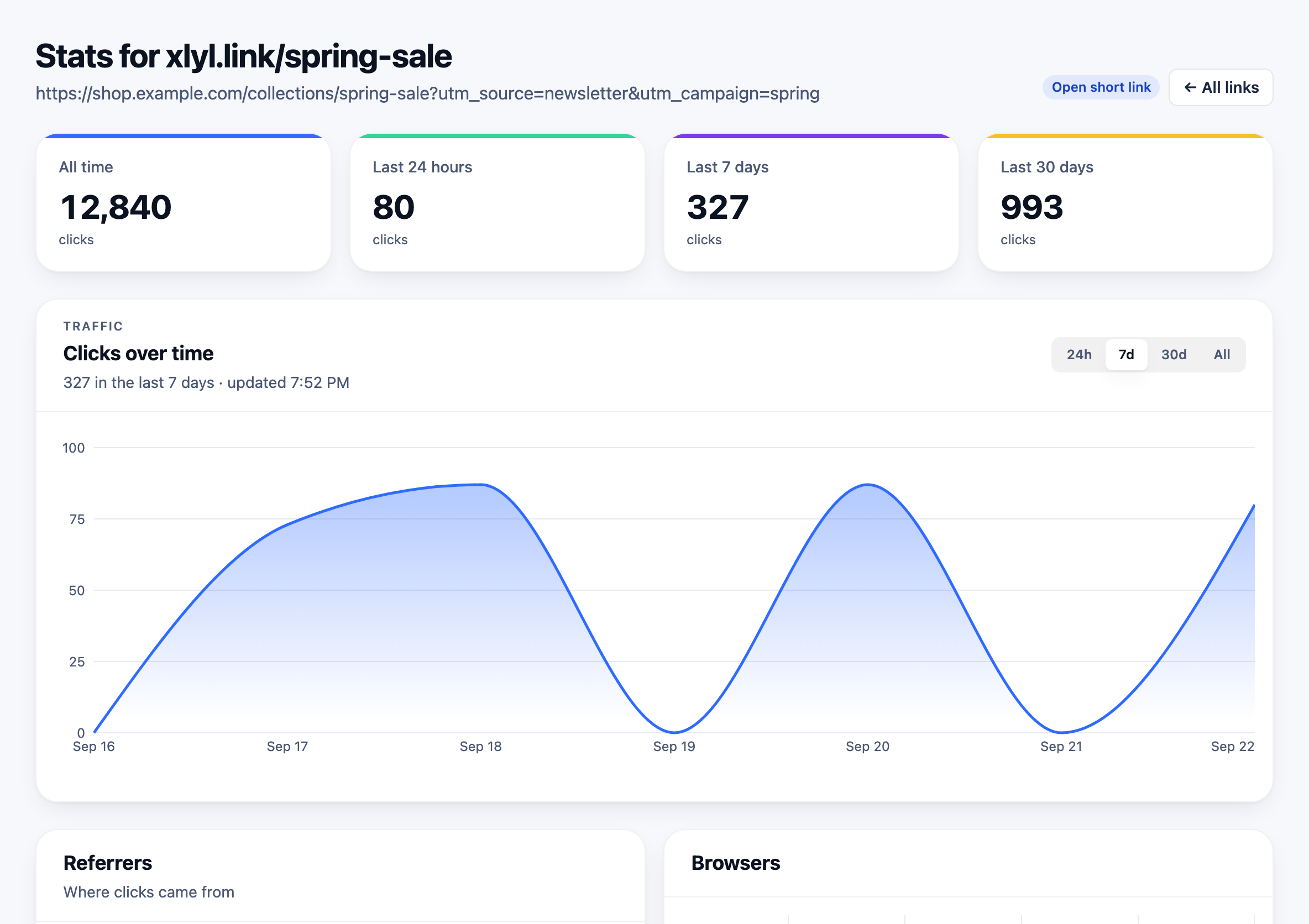
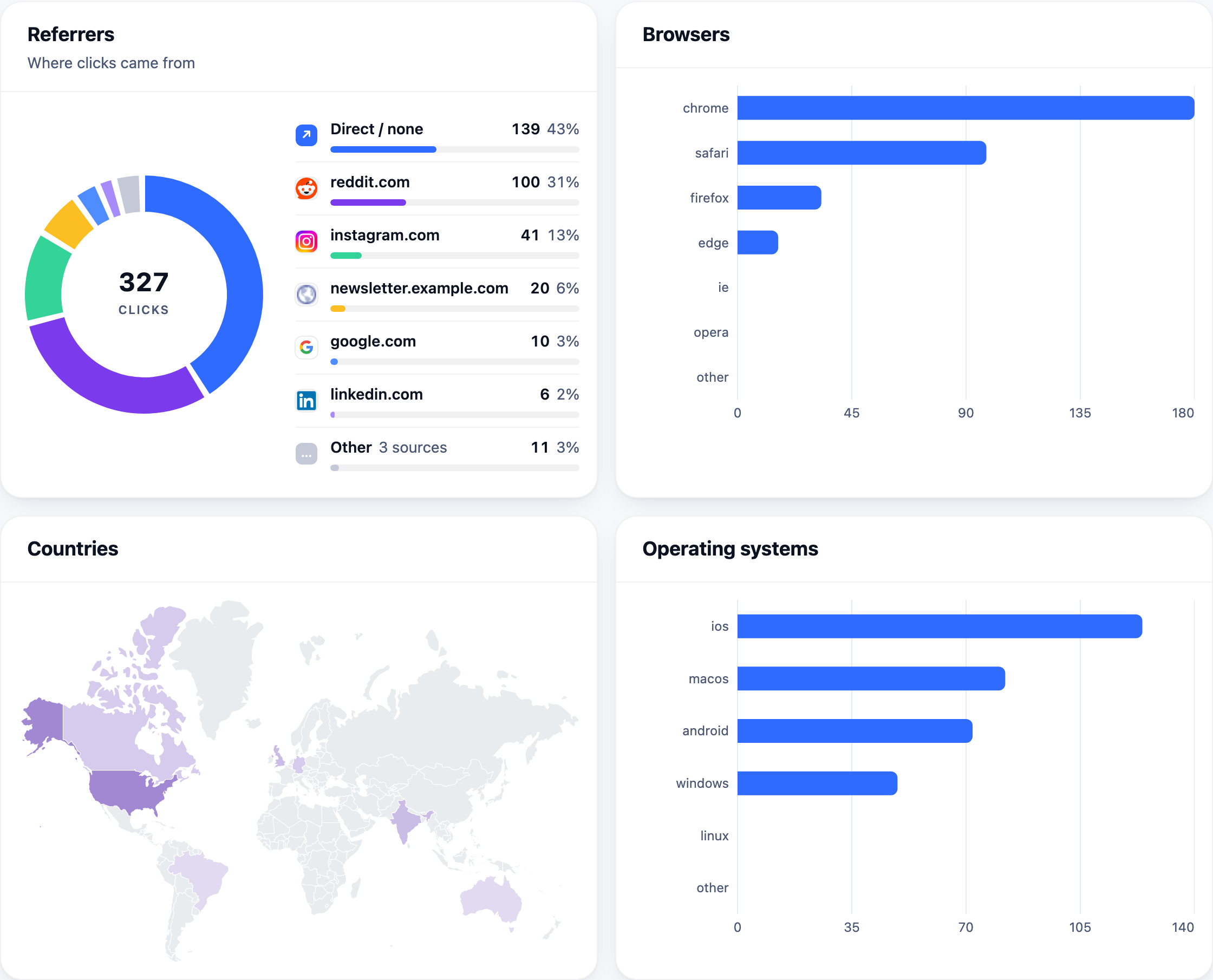
Below it, the breakdowns that answer where the traffic came from: referrer, browser, operating system and country. The referrer chart names the top sources and rolls the long tail into one row, so a link shared in fifty places still reads at a glance.
What is recorded, and what never is#
The honest version, because "privacy-friendly analytics" is a phrase everyone uses and few define.
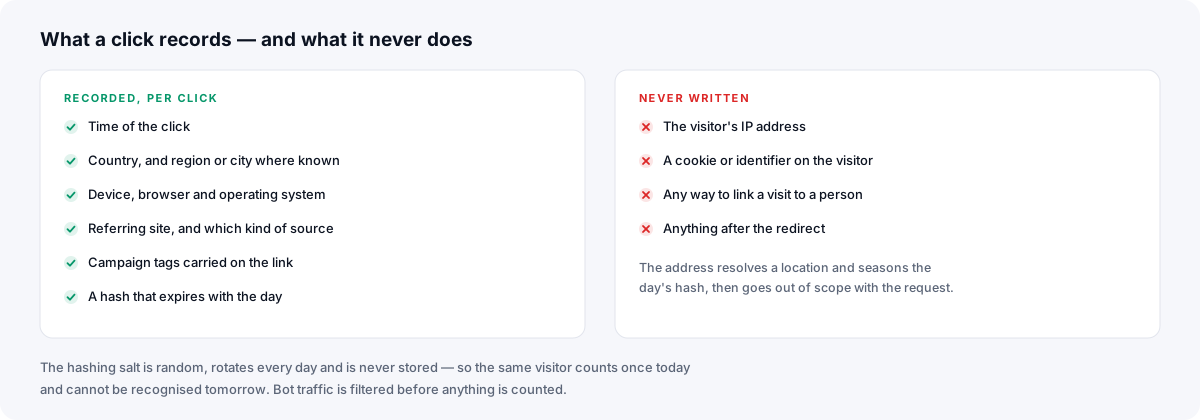
A click writes one row against the link. The visitor's IP address is used in memory to resolve a location from a local database and to compute a hash salted by a key that is replaced every day, then discarded — it is never written down. No cookie is set on the visitor and no script runs in their browser. The privacy policy sets this out in full.
That is what makes unique-visitor counts possible without a visitor log: the same person counts once today and cannot be recognised tomorrow, so the numbers are honest and there is still no address in the database to leak.
Making the numbers mean something#
Analytics on one link shared everywhere tell you a total and nothing else. The discipline that makes them useful is one short link per placement — the newsletter, the Instagram bio, the printed flyer and the sales deck each get their own — so every count answers a question.
The campaign tracking guide covers that method with UTM parameters, and the naming guide covers keeping a library of them findable. For pulling the numbers into your own reporting, the API returns the same statistics as JSON.
Frequently asked questions
- How do I track clicks on a short link?
- Create the link while signed in. Every click is then recorded and shown on the link's stats page: totals over time, plus breakdowns by country, browser, operating system and referrer.
- Are bot clicks counted?
- No. Requests from known crawlers and link-preview bots are filtered before they reach the statistics, so counts reflect people.
- Does link tracking store visitors' IP addresses?
- No. The address is used at the moment of the click to resolve a location and to derive a hash whose salt is replaced every day, then discarded. Each click gets a row, but the address is in none of them.
- Can I see analytics for links created without an account?
- No. Anonymous links are not tied to anyone, so there is no dashboard to show them in. Sign in before creating a link you want to track.